

Applications open for SPARKS LOY & FSC 2027
The prestigious SPARKS Learner of the Year competition is gearing up for its eighteenth year, alongside the inspiring SPARKS Female Skills Competition – and applications are now officially open!
Using data from the Office for National Statistics, they looked at three primary factors that affect how desirable a region is for building a career in the trades: jobs availability, pay and cost of living.
Overall, the best region for electrical and electric trades is Yorkshire and the Humber, followed by Scotland and the West Midlands. These three regions have the best combination of pay, affordable living and jobs for electricians.
The three regions that came out bottom for electricians are the East Midlands, South East and London.

The South East had 36,000 electrical and electric trades jobs in 2019, the highest of any region.
To compare the real availability of jobs in each region, NimbleFins calculated the number of electrical jobs per 1,000 working people in each area. In regions with a higher jobs density you’re likely to have a better chance at finding employment.
With 11.1 electrical and electrician trades jobs per 1,000 economically active people, Yorkshire and the Humber has the best supply of electrician jobs in Great Britain per person. In contrast, the UK has an average of just 8.1 electrical jobs per 1,000 people.
The region with the second-best supply of jobs is the West Midlands, where there are 27,000 jobs and 9.2 skilled trades jobs per 1,000 people. Scotland and the East of England tied for third-best jobs density, with 9.0 electrical trades jobs per 1,000 people.
The area with the worst supply of electrical and electric trades jobs on a per-person basis is London, with only 4.7 jobs per 1,000 people.
The most affordable place to live and work as an electrician is Scotland. The average pay of £36,823 is ranked 2nd highest out of the 10 regions in the study, second only to London.
And the relatively low cost of living in the region means a worker’s pay goes furthest towards household bills and other living expenses.

With the typical Scottish household budgeting £25,594 a year on living expenses, the pay/cost of living metric for Scotland is 1.44 — the highest in the study. This is 26% higher than the average pay/cost of living metric in the UK of 1.14. Areas with a higher pay/cost of living metric are more attractive to live and work because, all else equal, workers have an easier time affording their bills.
While electricians in London earn the most (£37,400 a year on average), the high cost of living in the capital makes London less affordable. The pay/cost of living metric in London is 1.09.
Many electricians work in London to take advantage of higher pay and choose to live in a different, cheaper region, but with this option you could spend many hours a week or even each day commuting or stuck in traffic.
However, when you take into account regional pay and living expenses, the South East is the region where electricians are likely to have the most trouble affording to live. In the South East, households spend an average of £34,190 a year but a typical electrician earns £34,110 a year (nearly the same amount as the typical household spends annually), with a pay/cost of living metric of 1.0 — the lowest in the study.
When choosing where to start building your career as an electrician, keep in mind factors like jobs density and affordability of an area, as well as typical pay ranges. You may find that moving to a different region of the UK brings you more long-term career success and financial stability.
So, are we all off to live and work in Scotland, then?!
The prestigious SPARKS Learner of the Year competition is gearing up for its eighteenth year, alongside the inspiring SPARKS Female Skills Competition – and applications are now officially open!

We’re delighted to reveal that the SPARKS Learner of the Year 2026 is Samuel Stevely of HRUC Uxbridge!

We are delighted to announce the winner of the SPARKS Female Skills 2026 – congratulations to Poppy Lott from Bridgwater College!

Three Top Tips for Building Your Professional Social Media Presence: Showcase your skills, grow your network and get noticed!

SPARKS Competitions: Discover how entering could showcase your electrical skills, boost your confidence and open doors to new opportunities!

Carhartt’s new women’s Steel Pants have been designed around how women actually move and work on site rather than simply resizing men’s.
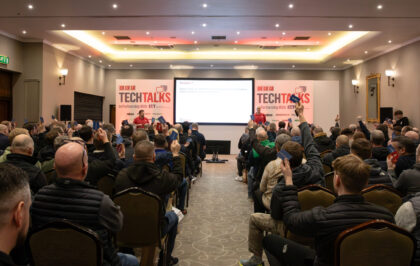
Electrical distributor CEF has announced that registrations are now open for its latest TechTalks series, running from May to July 2026.