

Applications open for SPARKS LOY & FSC 2027
The prestigious SPARKS Learner of the Year competition is gearing up for its eighteenth year, alongside the inspiring SPARKS Female Skills Competition – and applications are now officially open!
UK employers will be encouraged to take on more apprentices following the introduction of a new levy this month. But which businesses are expected to pay, how much will they have to put in, and on what can they use the funds? And why should they consider taking on apprentices?
If you’re an employer with a pay bill over £3 million each year, you must pay the new apprenticeship levy, but you can also use it to fund your own apprenticeship programmes. Funds in a business’ apprenticeship service account – and funding provided by the government through co-investment – can be used towards the costs of apprenticeship training and end point assessment. This must be with a government-approved training provider and government-approved assessment organisation, which can be found at the government website’s “register of apprenticeship training providers” page.
Once the apprenticeship training you’ve bought has started, monthly payments will be automatically taken from your account and sent to the provider. The provider will pass funds on to the end point assessment organisation.
You will see funds entering your account each month as you pay the levy, and funds leaving the account each month as you pay for training.
Funds can’t be used on other costs associated with apprentices or wider training. For example wages, statutory licences to practise, travel and subsidiary costs, managerial or brokerage costs, traineeships, work placement programmes or the costs of setting up an apprenticeship programme.
Employers in the trades industry could consider traditional apprenticeship programmes, such as maintenance electrician or plumbing and domestic heating technician, but there are also frameworks for other, more ‘back office’ roles that might be useful, such as business administration, accounting, and human resources.
Apprentices also offer a lot to their employers: they are trained in the specific skills and job role you require, and research shows that employers find apprentices make the most loyal employees. A survey showed that more than half of employers offering apprenticeships say that apprentices stay in the business longer than other recruits. They’ll complete assignments, attend classes and will be assessed by an assessor on a regular basis. However, this usually takes up just one day a week. Apprentices usually work a minimum of 30 hours a week.
For more details on apprenticeships and information on the process of setting up various programmes, how much school leavers of certain ages should be paid, and information on training providers, visit AllAboutSchoolLeavers’ dedicated recruiters pages.
The prestigious SPARKS Learner of the Year competition is gearing up for its eighteenth year, alongside the inspiring SPARKS Female Skills Competition – and applications are now officially open!

We’re delighted to reveal that the SPARKS Learner of the Year 2026 is Samuel Stevely of HRUC Uxbridge!

We are delighted to announce the winner of the SPARKS Female Skills 2026 – congratulations to Poppy Lott from Bridgwater College!

Three Top Tips for Building Your Professional Social Media Presence: Showcase your skills, grow your network and get noticed!

SPARKS Competitions: Discover how entering could showcase your electrical skills, boost your confidence and open doors to new opportunities!

Carhartt’s new women’s Steel Pants have been designed around how women actually move and work on site rather than simply resizing men’s.
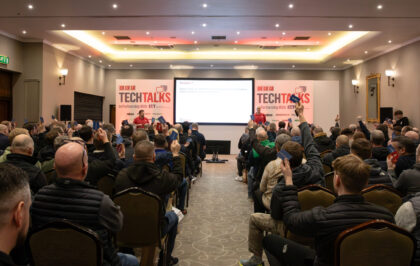
Electrical distributor CEF has announced that registrations are now open for its latest TechTalks series, running from May to July 2026.