

Three Top Tips for Building Your Professional Social Media Presence
Three Top Tips for Building Your Professional Social Media Presence: Showcase your skills, grow your network and get noticed!

Analysis of the construction industry’s biggest payroll shows average weekly pay for electrical subcontractors increased to £1,071 during May.
Ian Anfield, managing director of Hudson Contract, said: “Self-employed electricians are more able than employees to keep pace with the rising cost of living. Even if things level off in the next few months and rate inflation flattens, self-employed electricians have the options to take on more work or achieve more output to increase their income. In contrast, the directly employed are reliant on annual pay deals negotiated by unions with whom most of them have no membership or relationship with.”
Mr Anfield added: “None of our clients are telling us they are struggling for work but quite a few are telling us there are fewer tenders coming through the door. It could be a sign that a bit of heat is coming out of the market in some parts of the country. For the last two or three years, the construction industry has been incredibly resilient in dealing with inflation linked to Brexit, the pandemic and problems in the Suez Canal blocking up the supply chain for materials. It’s a real shame that the government, which says construction is the foundation of the economy, has chosen to slap huge tax rises on the industry by ending the red diesel rebate and introducing a VAT reverse charge. Inflation is now big news because it is hitting households and it will be even bigger news if the tax rises start to impact housebuilders – the foundation of the economy can only carry so much.”
Hudson Contract is the UK’s largest provider of tax status and employment contract services to the construction industry with annual revenues approaching £1.8 billion and a client base of 2,500 construction SMEs.
The family-owned group delivers the most accurate indication of subcontractor pay trends across the construction industry, publishing the average pay for a spectrum of 17 different trades split across 10 regions in England and Wales.
It supplies statistics to the Bank of England to keep policymakers updated with real-time insights on demand for skilled labour.
Three Top Tips for Building Your Professional Social Media Presence: Showcase your skills, grow your network and get noticed!

SPARKS Competitions: Discover how entering could showcase your electrical skills, boost your confidence and open doors to new opportunities!

The prestigious SPARKS Learner of the Year competition is gearing up for its eighteenth year, alongside the inspiring SPARKS Female Skills Competition – and applications are now officially open!

Carhartt’s new women’s Steel Pants have been designed around how women actually move and work on site rather than simply resizing men’s.

We’re delighted to reveal that the SPARKS Learner of the Year 2026 is Samuel Stevely of HRUC Uxbridge!
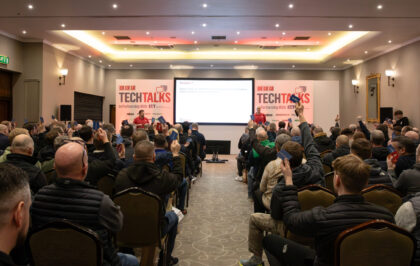
Electrical distributor CEF has announced that registrations are now open for its latest TechTalks series, running from May to July 2026.