

Three Top Tips for Building Your Professional Social Media Presence
Three Top Tips for Building Your Professional Social Media Presence: Showcase your skills, grow your network and get noticed!
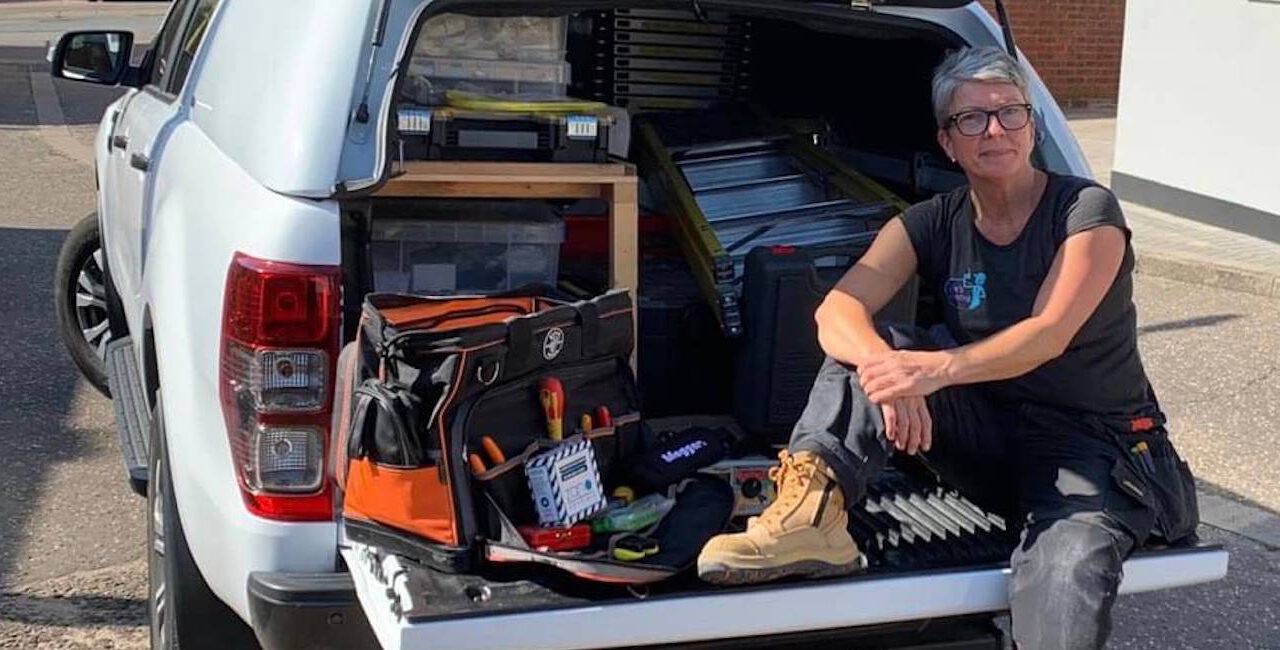
Karen Boom of @Shes_ElectricUK discusses industry changes, social media and more, including setting an inspiring example for future generations of electricians.
Question: Over the last three years, how has business changed for you?
Karen: There’s a couple of ways business has changed. For me, now almost 85-90% of my work is coming through word of mouth. I also think I’ve grown in confidence, massively. I’ve almost got to the point where I finally give myself permission to accept the fact that I’m a real sparky.
One thing I’ve come to realise over the last few years is how little the education system views trades as a viable option, it has been massively eye opening for me. On one hand, it’s made me quite angry – particularly reflecting on what I feel is a very outdated apprenticeship system – but on the other hand I’ve become very passionate about being a role model in the electrical space.
As a result, I am now more proactive on social media. Not because I’ve really got the time on my hands to do it, but because if somebody doesn’t do it, I feel like we’re all hiding. I truly believe the profession has never been more important, so it’s vital we encourage future generations to consider it as a viable career path.
What challenges do you face at work?
Electrical safety is a constant challenge. It’s always the last thing on people’s minds – they’ll book a holiday, have the garage converted and spend lots of money on aesthetic things, but when you say ‘well, you really need a fuse board upgrade’ they shake their heads and are reluctant to spend.
Another challenge I’m facing more frequently now is in relation to electric vehicles, specifically the Hybrid models of EV. Manufacturers are literally letting their customers walk away from the showroom having purchased their new car thinking that they can simply plug it into a normal socket. The whole area is so unregulated, and this is a particular challenge within the industry at the moment.
You’ve previously mentioned that dangerous, illegal installations were an issue. Do you still come across these frequently?
More and more to be honest. There is a massive difference between making something work and making something safe. Lots of people can make a circuit work (you go to school; you do physics and you get taught how to make a circuit – that’s simple) but it doesn’t mean you know how to make it safe.
I had a customer the other day who was having some issues with his lights. His fuse board was on the ceiling, the lights would regularly trip, and it was causing him a number of issues. I asked him how old the wiring was, and his reply was, – ‘29 years, exactly. I’ll tell you how I know that: it’s because I did it.’ So, I said ‘okay, that’s interesting, did you used to be a spark then?’ And he said, ‘no, my dad’s a builder’. When I started poking around and pulling a few switches off the wall and looking at the wiring, it was truly shocking.
What’s the most interesting project you have worked on recently?
I’ve been working on a new build project from the ground up. I love these sorts of projects as I like getting involved in the really early stages of something. It’s great being able to advise people on what’s possible in ways that they haven’t already thought of. I love a bit of colour-changing LED tape – I find that a lot of people still aren’t aware of the possibilities that are available with their electrics and being able to explain these possibilities to them is fantastic. The innovations with wireless technology are also massive – having things switch from several different locations without even having to run any wiring, and home automation – I love all that.
Is that where reliable, simple products like Zano are important – solutions that are easy to install and simple to explain to the customer?
Product knowledge is key when it comes to the projects I work on – it gets you out of tricky situations, and so is being able to trust the products you’re working with. This job isn’t all about going out and doing the job, you’ve got to be in the know in terms of new technology, you have to do your own research online and read all the publications, which really helps you out when you’re on site.
Do you have any tricks of the trade?
I love talking to people and I’m pretty nosy too, it helps me out when I’m on the job. I’m undertaking some domestic work today where I spotted another set of lights in need of an LED upgrade, so I asked the client, ‘what about those lights down there, are we upgrading those at the same time? We probably should because halogen is being phased out…’. Before you know it, I’ve managed to change one day’s work into two and a half. Just by having a chat and making some recommendations. People buy in to that, especially if you can upsell the fact that there’s something in it for them in the long run – for example saving money on energy bills through a switch to LED.
Are the LED products you are working with changing?
They are changing daily, which is a big challenge – especially in the LED downlight industry. Changes are good but sometimes they can leave you in a pickle. Say for example you have 30 downlights in a room, and one fails. You might reassure yourself by thinking it’s under warranty, but when you get to your wholesaler you find out that the manufacturer no longer does that model. Meaning that you’ve now got 30 lights in a room and one of them is different – the matte white effect has now got a sort of gloss to it, which is so frustrating, but I guess it’s all part of the fun.
Finally, what do you love most about social media? Is it a platform helping you with business, or is it just for fun?
Social media is great for networking – and it’s a bit of light relief. It’s also opened several opportunities for me. I want to get the message out there: I feel passionately that we should be promoting this profession just as heavily as any other career choice might be promoted, and we should be doing it in a positive light. Being an electrician is a great career to have. You’re never going to be out of work if you can talk to people and you’ve got a trade.
Karen’s top tips:
Always look and dress professionally. Your customers will have more regard for you if you take your appearance seriously.
Keep fit and healthy – if your body gives up on you, you’re out of work!
Buy your electrical equipment from reputable wholesalers.
Make sure you can rely on the products you work with.
Having product knowledge and knowing current trends are vital if you’re looking to upsell your work.
Be sociable – it’s a huge advantage in this line of work. You never know what opportunities might present themselves through talking to people.
Taken from an original Sparky’s Corner interview by LED dimming manufacturer Zano.
Three Top Tips for Building Your Professional Social Media Presence: Showcase your skills, grow your network and get noticed!

SPARKS Competitions: Discover how entering could showcase your electrical skills, boost your confidence and open doors to new opportunities!

The prestigious SPARKS Learner of the Year competition is gearing up for its eighteenth year, alongside the inspiring SPARKS Female Skills Competition – and applications are now officially open!

Carhartt’s new women’s Steel Pants have been designed around how women actually move and work on site rather than simply resizing men’s.

We’re delighted to reveal that the SPARKS Learner of the Year 2026 is Samuel Stevely of HRUC Uxbridge!
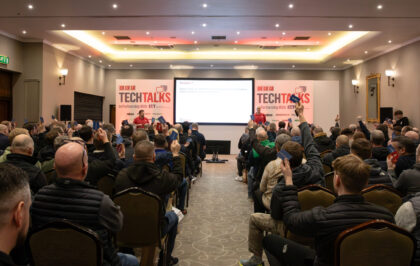
Electrical distributor CEF has announced that registrations are now open for its latest TechTalks series, running from May to July 2026.