

Three Top Tips for Building Your Professional Social Media Presence
Three Top Tips for Building Your Professional Social Media Presence: Showcase your skills, grow your network and get noticed!

In the first two parts of this series on sustainability, we have looked a the benefits of choosing products with high levels of post-industrial or post-consumer recycled content and addressed the myths surrounding environmentally conscious solutions.
When considering the environmental impact of a product, the materials used in its manufacture, especially the level of recycled content is often the focus.
This is, of course, an essential factor in product selection, especially given the fact that the UK construction sector is the largest consumer of natural resources. In fact, the industry currently consumes 23% of all plastic produced in the UK.
However, in addition to the materials used, installers should look at a broader range of factors including full compliance with environmental regulations and how the manufacturer is reducing its wider environmental impact.
For any product that goes into a building, it is important to ensure the manufacturer complies with the Registration, Evaluation, Authorisation and restriction of Chemicals (REACH) standards.
This regulation, which was introduced by the European Union (EU) in 2007, aims to control and monitor the risks arising from the use of chemicals in order to protect human health and the environment.
To comply with the regulation, companies must identify and manage the risks associated with any substances used in their products or as part of their processes. Following the UK’s departure from the EU, REACH was adopted into UK law as UK REACH in January 2021 with the same duties for businesses.
Responsible manufacturers will have an easily accessible REACH statement that outlines their compliance with the requirements of the legislation.
Beyond the products themselves, it is important to look at the environmental credentials of the business as a whole.
One of the clearest indicators of a commitment in this area is the ISO 14001 Environmental Management Accreditation. This demonstrates that a manufacturer has taken steps to measure, monitor and improve its environment impact in all areas of the organisation.
There are a wide range of factors to consider when selecting cable management products to ensure that the environmental impact is minimised.
In addition to the product specific issues, installers must also look at the policies and practices of the business, as this ultimately influences the true environmental performance of the products.
For more information on Marshall-Tufflex, visit: www.marshall-tufflex.com.
Three Top Tips for Building Your Professional Social Media Presence: Showcase your skills, grow your network and get noticed!

SPARKS Competitions: Discover how entering could showcase your electrical skills, boost your confidence and open doors to new opportunities!

The prestigious SPARKS Learner of the Year competition is gearing up for its eighteenth year, alongside the inspiring SPARKS Female Skills Competition – and applications are now officially open!

Carhartt’s new women’s Steel Pants have been designed around how women actually move and work on site rather than simply resizing men’s.

We’re delighted to reveal that the SPARKS Learner of the Year 2026 is Samuel Stevely of HRUC Uxbridge!
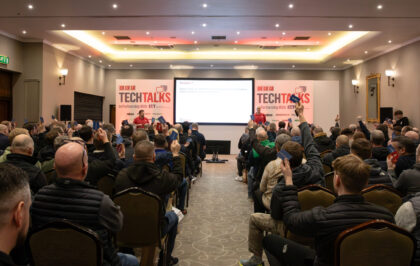
Electrical distributor CEF has announced that registrations are now open for its latest TechTalks series, running from May to July 2026.