
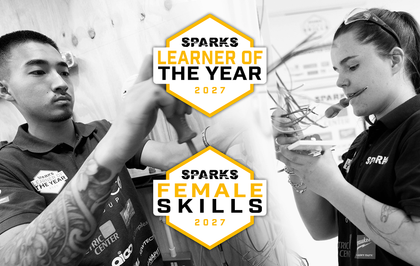
Applications open for SPARKS LOY & FSC 2027
The prestigious SPARKS Learner of the Year competition is gearing up for its eighteenth year, alongside the inspiring SPARKS Female Skills Competition – and applications are now officially open!

The Electrotechnical Certification Scheme (ECS) says the quality of training provided by the Royal School of Military Engineering to the Royal Engineers at Chatham in Kent is extremely high, with personnel typically spending a minimum of five a half years in the Corps, inclusive of training to become tradespeople in their chosen specialism.
However, military qualifications have rarely, if ever, been fully recognised outside the armed forces, with many candidates having to undertake additional civilian vocational qualifications once they have made the transition from military life.
The Joint Industry Board (JIB), National Electrotechnical Training (NET), Electrical Contractors Association (ECA) and Unite the Union have been working with the Royal Engineers at Chatham to map these worthwhile and valuable qualifications into the electrical industry, for equivalence to the established National Occupational Standards and industry criteria.
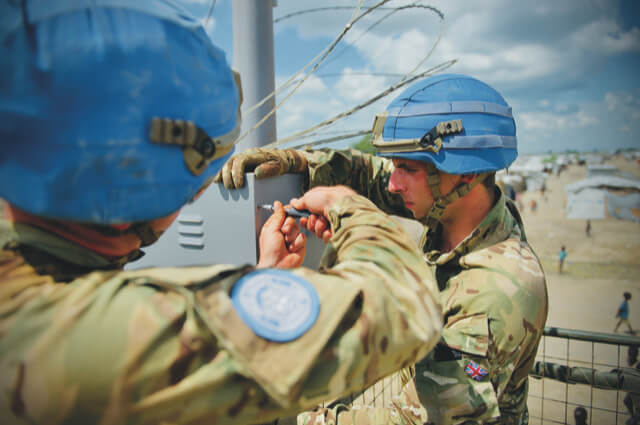
Andy Reakes, Head of Operations, Employment and Skills at the JIB, said: “The Armed Forces offer a range of professional careers as well as many transferrable skills that will serve soldiers well once they leave. It is vital to be able to transition into civilian life as smoothly as possible and this work provides important industry recognition of the skills and experience gained during their time in the military within ECS. This announcement will create a career path for ex-military personnel who will be a great addition to the pool of talent in the building sector.”
Qualifications undertaken through the Royal Engineers for electrotechnical studies and practice will lead to the awarding of Level 3 or Level 4 Diplomas in Electrotechnical Studies and Practice (Military Engineering). An AM2 end point assessment is also required.
Furthermore, upon completion personnel achieve continuing professional development qualifications for inspection and testing, and BS 7671: 2018 through City & Guilds.
Industry and employers value the skills, work ethic and organisation of those who have been in the military. This is why ECS cards awarded to those who qualify through this route will be recognised with ‘HM Forces Trained’ on the reverse of their ECS card.
For personnel who trained prior to the introduction of vocational qualifications through the DAO, the industry has the Experienced Worker Assessment (EWA) which includes facility for industry Recognition of Prior Learning (RPL) for training via HM Forces routes.
Lt Col Stuart Brown, Head of People Policy for the Royal Engineers, said: “I’m delighted to find out how the qualifications gained at the RSME for our electricians can now result in the award of an Installation Electrician and ECS Registered Electrician status. This shows just how good our training is and a massive thank you to the Royal School of Military Engineering for that and to our partner MKC Training who are responsible for the instruction and who have been working with the awarding body to attain the qualifications.
“It is hugely important to have the work and skills of our soldiers recognised by the civilian industry. This shows the quality of work we do in the Army and also, considering how everyone leaves the Army one day, this allows our soldiers to apply for a job getting the full credit for the skills and experience they have amassed. Being ‘HM Forces Trained’ is a sign of quality, integrity and something to be proud of.”
All images are copyright of Royal Engineers 2020. All rights reserved.
The prestigious SPARKS Learner of the Year competition is gearing up for its eighteenth year, alongside the inspiring SPARKS Female Skills Competition – and applications are now officially open!

We’re delighted to reveal that the SPARKS Learner of the Year 2026 is Samuel Stevely of HRUC Uxbridge!
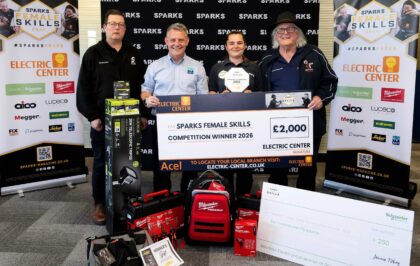
We are delighted to announce the winner of the SPARKS Female Skills 2026 – congratulations to Poppy Lott from Bridgwater College!

Three Top Tips for Building Your Professional Social Media Presence: Showcase your skills, grow your network and get noticed!
SPARKS Competitions: Discover how entering could showcase your electrical skills, boost your confidence and open doors to new opportunities!

Carhartt’s new women’s Steel Pants have been designed around how women actually move and work on site rather than simply resizing men’s.
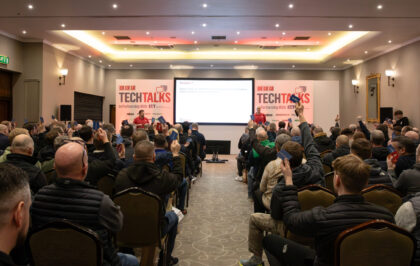
Electrical distributor CEF has announced that registrations are now open for its latest TechTalks series, running from May to July 2026.