
EcoVadis Bronze Sustainability Medal for Scolmore Group
Scolmore Group, is delighted to announce that it has retained its Bronze Sustainability Rating Medal first awarded by EcoVadis in 2022.
A town in the Netherlands has installed red LED street lights – so that a rare breed of bats is not affected.
Rare bats in Zuidhoek-Nieuwkoop can now go about their nocturnal business undisturbed as the lights are designed to emit light that does not affect their natural senses and rhythms.
The street lights use a special light wavelength which illuminates roads for residents but is perceived by bats as complete darkness.
Normal street lighting impacts bats’ internal compass, feeding patterns, and general night-time behaviour.
Zuidhoek-Nieuwkoop is home to many rare and vulnerable animal and plant species.
The town and its surrounding area is part of the Natura 2000, a network of nature protection areas across Europe comprised of breeding and nesting sites for rare and threatened species.
In 2011, Nieuwkoop embarked upon an initiative to build 89 new houses that meet the world’s highest sustainability standards.
The bat-friendly street lighting was installed after the site was revealed to be an important feeding ground for some rare bat species.
Guus Elkhuizen, city council member in the Nieuwkoop municipality, said: “Nieuwkoop is the first town in the world to use smart LED street lights that are designed to be friendly to bats.
“When developing our unique housing program, our goal was to make the project as sustainable as possible, while preserving our local bat species with minimal impact to their habitat and activities.
“We’ve managed to do this and also keep our carbon footprint and energy consumption to a minimum.”
So as not to disturb the nocturnal feeding and night-time activity of the bats, a special light ‘recipe’ was developed that involved extensive research by Signify (formerly Philips Lighting), the University of Wageningen and other conservation organisations.
To further optimise light levels, the municipality installed Signify’s connected LED lighting system and management software – Interact City.
This lighting system enables remote management of light points across a town or city that can provide energy savings of up to 70% compared to conventional High Pressure Sodium (HPS) street lighting.
The system allows each light point to be controlled remotely, allowing authorities to respond to a request from a resident to turn up or lower the brightness of the lighting outside their home, or to quickly raise the light levels in an area to aid emergency services.
When the streets are empty late at night, the authorities can dim the lights to cut unnecessary energy use.
Scolmore Group, is delighted to announce that it has retained its Bronze Sustainability Rating Medal first awarded by EcoVadis in 2022.
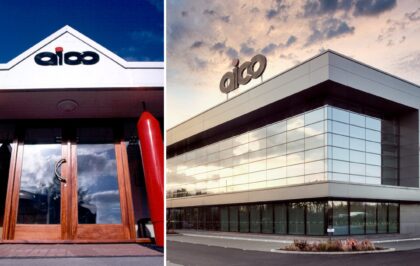
This year, Aico celebrates 35 years of innovative technology, quality alarms and sensors leading them to become an European market leader.
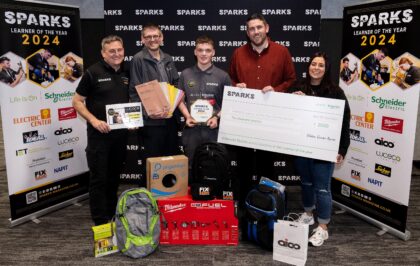
We are pleased to announce our SPARKS Learner of the Year 2024 Winner, following an intense two-day final on the 23rd and 24th of April…
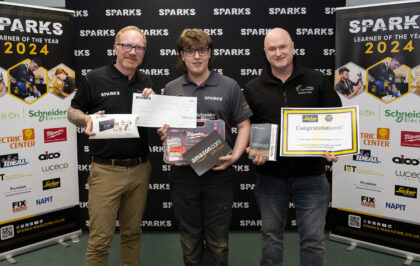
The spotlight turns to the next generation of budding electricians with the Finalist Announcements of SPARKS Learner of the Year 2024.

National Careers Week is a celebration of career possibilities, tailored to helping you make informed career choices.
Get Ready for National Apprenticeship Week with SPARKS Magazine! Kickoff: National Apprenticeship Week, 5th – 11th Feb!