
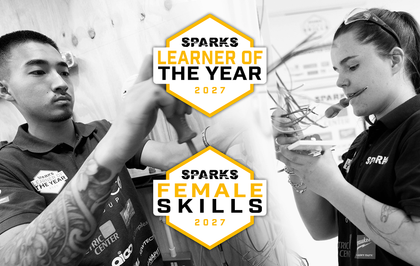
Applications open for SPARKS LOY & FSC 2027
The prestigious SPARKS Learner of the Year competition is gearing up for its eighteenth year, alongside the inspiring SPARKS Female Skills Competition – and applications are now officially open!
Apprenticeships provide the chance to ‘earn and learn’ in a wide range of jobs and sectors and give you the chance to develop skills, experience and qualifications. They are more than just a qualification; they are an excellent way of gaining workplace experience, understanding how a business works, improving personal and social skills and starting out on your career.
Your Terms & Conditions of Employment
All apprentices have employed status and are covered by the terms and conditions contained in their contract of employment and any relevant employment legislation.
Your employment contract should cover areas such as:
How much should you get paid?
There is an Apprenticeship national minimum wage (NMW) in the UK which applies to all 16 to 18-year-olds and to those aged 19 and over in the first year of their Apprenticeship. The rate 1st April 2017 is £3.50 per hour. Once out of your first year of apprenticeship, you are then entitled to, as a minimum, the rate applicable to your age. You are entitled to the National Minimum Wage.
If you are not being paid the legal minimum, or the correct rates as per your contract of employment and/or collective agreement, as a member you can confidentially contact Unite for information, advice, guidance and if required, trade union representation.
Join Unite today at www.unitetheunion.org/join
What else is in it for you?
So how much is it?
Year 1 – 65p per week or £2.79 per month
Year 2 – £1.30 per week or £5.63 per month
Year 3 – £1.95 per week or £8.43 per month
Year 4 – £2.60 per week or £11.27 per month
Still unsure? Check some facts from fiction below or contact Unite on 0207 6112500.
Fiction: Trade Unions aren’t for people like me
FACT: Unless you win the lottery or have millions in the bank, the chances are you’ll spend roughly a quarter of your life at work because that is the only – legal – way to earn money.
Anyone that goes to work and who cares about their pay and conditions – holiday entitlement, pension and so on – equal rights, safety and training needs a trade union.
Young workers are most likely to be vulnerable to exploitation as some unscrupulous employers will assume that they are less likely to know their rights.
One in four young workers has experienced bullying and 53 per cent fear they can’t support a family on
their wages.
————–
Fiction: Unions aren’t formally recognised in my workplace so I can’t join
FACT: Anybody has the right to join a union regardless of whether their employer formally recognises trade unions or a union organises within their workplace.
When you sign up you should be given information about which branch you belong to (this could be for a local area if there’s not one in your workplace). Unions also have contact numbers and/or helplines for members to access legal advice.
You can also get more active in your union by getting involved with campaigns and other activities / events.
The prestigious SPARKS Learner of the Year competition is gearing up for its eighteenth year, alongside the inspiring SPARKS Female Skills Competition – and applications are now officially open!

We’re delighted to reveal that the SPARKS Learner of the Year 2026 is Samuel Stevely of HRUC Uxbridge!
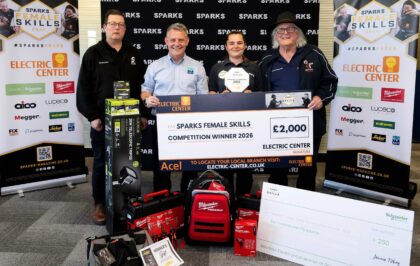
We are delighted to announce the winner of the SPARKS Female Skills 2026 – congratulations to Poppy Lott from Bridgwater College!
Three Top Tips for Building Your Professional Social Media Presence: Showcase your skills, grow your network and get noticed!

SPARKS Competitions: Discover how entering could showcase your electrical skills, boost your confidence and open doors to new opportunities!

Carhartt’s new women’s Steel Pants have been designed around how women actually move and work on site rather than simply resizing men’s.
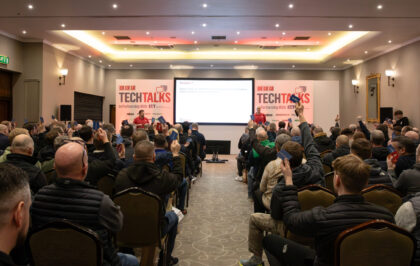
Electrical distributor CEF has announced that registrations are now open for its latest TechTalks series, running from May to July 2026.